

Open the completed state
Use the result link in the conversation or reopen the task from the workspace’s conversation and task history. Confirm the task belongs to the intended workspace and request.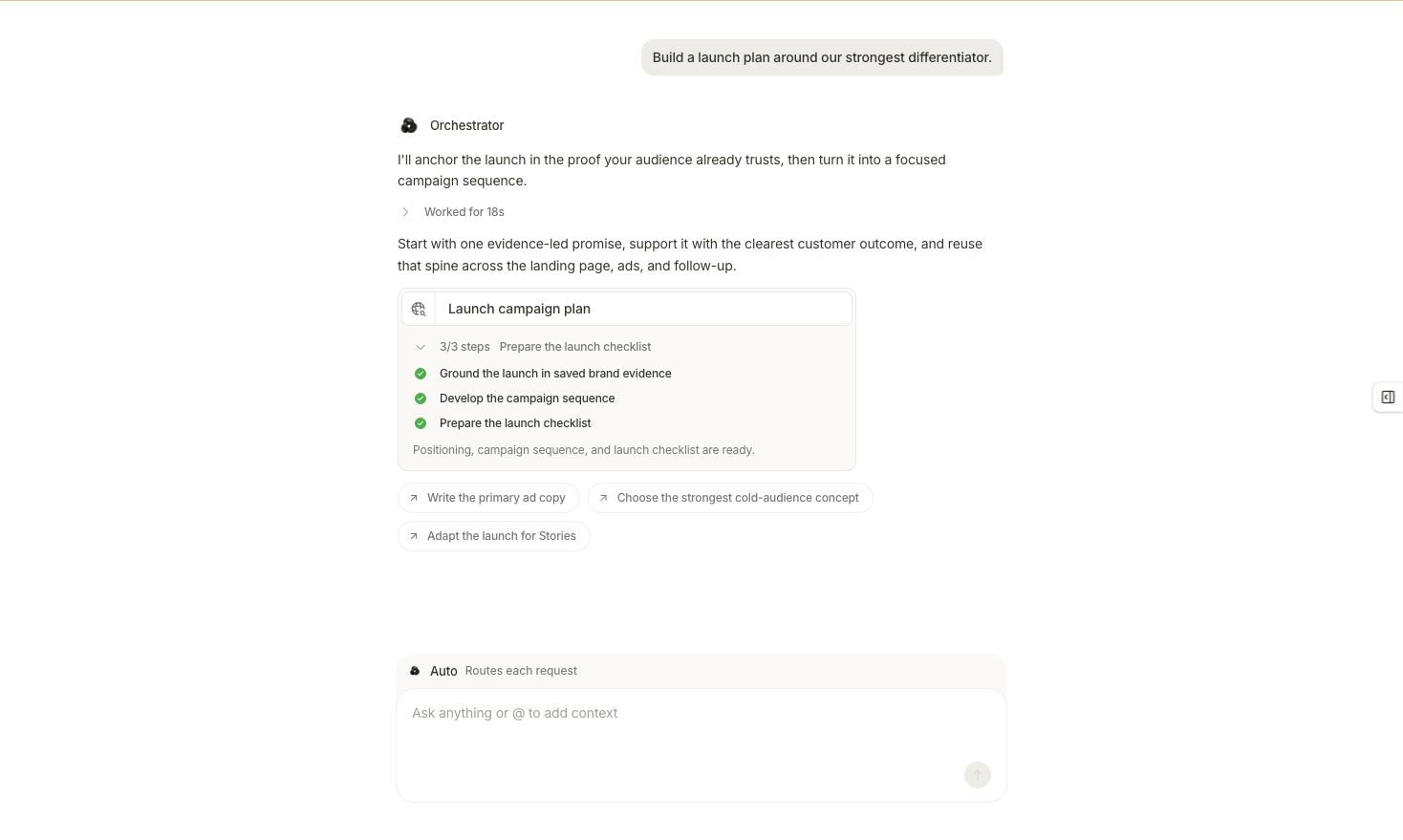
The completed state combines the final answer, finished task steps, and optional follow-up directions.
- Original request. Confirm the outcome and authority boundary at the top of the conversation.
- Final answer. Check that it answers the requested question rather than a nearby one.
- Task receipt. Expand or inspect the completed steps when you need to understand what work ran.
- Produced artifact. Open the report, brief, creative, campaign draft, or workflow in the product surface that owns it.
- Suggested follow-ups. Treat these as new requests you can choose, not as work already completed.
Run the evidence check
Review depth should match the consequence of the result. Use all five checks for any result that can influence budget, targeting, creative, reporting, or launch decisions.1. Match the request
Compare the result with the requested outcome, source, scope, time window, output, and action boundary.- An account-level request should not silently become a campaign-only answer.
- A read-only request should not be reported as a completed provider change.
- A requested artifact should exist in the surface that owns it, not only as a recommendation in chat.
2. Verify source and freshness
Identify which connected system supplied every decision-driving figure. Meta Ads, Google Ads, Shopify, GA4, and Triple Whale (Beta) can describe different parts of the customer journey; their numbers are not interchangeable. Check the provider account, selected resource, latest available coverage, and any missing or partial dates. When the result and provider state disagree, open Integrations before relying on the number.3. Verify time and scope
Confirm:- Exact start and end dates
- Timezone used to define each day
- Complete versus partial periods
- Workspace and provider account
- Account, campaign, ad set or ad group, ad, product, or other entity level
- Filters, attribution source, attribution model, and currency when relevant
4. Recalculate the main claim
Ask for the inputs behind the conclusion. For a percentage change, verify the previous value, current value, and formula. For CPA or ROAS, confirm the numerator and denominator use the intended source and reporting definition. Missing data is not zero. If a source is disconnected, still syncing, or incomplete for a date, treat the affected metric as unknown.5. Identify the action state
Determine what exists now:Review the proposal branch
When the result leads to work that needs permission, inspect the proposal rather than approving from the summary alone. Before you select the proposal’s displayed run control, confirm:- The intended workspace and connected provider
- Every object or destination the task can affect
- The evidence and date range that justify the work
- Budget, targeting, creative, or publishing consequences
- Guardrails and autonomy settings that apply
- Whether the result should remain a draft, become paused work, or go live
- Who is authorized to approve
Ask for an evidence pass
Use this in the same conversation before a material decision:Resolve mismatches
Close the review loop
A reviewed result has four outcomes recorded in the conversation or downstream work:- The fact or artifact you accept
- The evidence window and source that support it
- Any limitation or open question
- The next action and whether it is only a suggestion, a draft, pending approval, or verified complete